[00:00:01] Speaker A: Welcome to Crypto Talk Radio, the podcast for everyday investors like you. Visit us on the
[email protected] and now here's your host, Leister.
[00:00:13] Speaker B: Thank you for that, Bailey. And welcome everybody out there in Crypto Talk radio
[email protected] cryptocurrency started running up minutes before we went on the air and I have a special episode for
[00:00:24] Speaker C: you that is apropos.
[00:00:26] Speaker B: Look it up.
But cryptocurrency is going on a run.
[00:00:29] Speaker C: We're going to speak briefly about the
[00:00:30] Speaker B: run because some people believe this is finally the run that people are waiting for, at least on the charts anyway. I'm going to share my thoughts about what that might be. I'm also going to share some warnings
[00:00:42] Speaker C: and caveats that others on YouTube will disagree.
[00:00:46] Speaker B: That rhymes. But I am going to share my thoughts because I think it's important.
I want people to keep be kept safe. But I can't guide your hand. You're going to have to make decisions
[00:00:54] Speaker C: about what you do with what we see.
[00:00:57] Speaker B: All I can do is provide my thoughts. And again, I have a special episode today. I'm gonna be. This is educational. It's a 101. I haven't done it one in a while. We're gonna do some one on one talk about that at the tail end. But for right now, Cryptocurrency is running up somewhat aggressively. We're gonna get into that with the numbers and it's important to keep in mind if you're still on that mine where you don't buy discounts, you're probably beyond help and I would recommend you get out of it cause I don't wanna see you lose money either.
We'll talk about that. Let's jump into it.
Coinmarketcap.com we're going to go ahead and zoom out to the month chart for Bitcoin showed a strong upward trend. First it had a brief upward trend starting earlier this morning.
Then it dipped again and then it ran up again. And people speculated this was the start of the run that we anticipated for a while.
Currently hovering around the $72,000 mark, Ethereum is currently about the $2,200 mark. Ethereum did have some sell offs on the way back up.
Bitcoin was the odd one though, because it's bottom. I say bottom in quotes.
[00:02:11] Speaker C: I'm talking the local bottom.
[00:02:13] Speaker B: The local bottom was roughly about 67, 68,000 bucks and it spiked up to the 72 that it currently sits at with a market cap that was dwindling 1.3 trillion in the market cap now at the 1.44 trillion mark. And so the market cap is spiking. There's more money flowing back in there and the price is going up aggressively. And of course, this is fresh off of the announcement about more purchases from Strategy MicroStrategy. Michael Sailor, I don't think he was the contributor. I think it was simply a natural event that was going to happen as a result of the compression of price price for such an extended period of time. Now, here's the caveat and my warning. And again, people on YouTube will emphatically disagree with me. And I want you to hold me to my audio. That's why it's out there. CryptoTalk FM and compare it against what they say.
[00:03:04] Speaker C: Do I think that this is the
[00:03:05] Speaker B: aggressive run that we were waiting for, you know, up to $200,000 Bitcoin or something? I don't think this is that run specifically, but I do think this is a strong enough run where we might
[00:03:17] Speaker C: get back up to at least 80
[00:03:18] Speaker B: to 85,000 in the short term before it corrects. Because if you watch the chart, you can see that people are selling on the way up because it's quick profit. If they bought at that $67,000 mark and they bought enough and it goes up to that 70, you're still getting good profits on that. There are other people who might think this is a bull trap.
I don't think it's a bull trap per se. I think these are legitimate pumps that I'm seeing. But I am stressing caution in the trade strategy. That said, I took a different angle because I don't do heavy cryptocurrency trading myself. But I do when I see a smart opportunity. And I was waiting for bitcoin to go ironically into the 30s because I
[00:04:02] Speaker C: said if it goes to 30, I'm
[00:04:03] Speaker B: going to buy some. And it never got that far, unfortunately.
But what I did do is I got some. I was on the Binance Smart chain because I mostly stay on the Binance. It's fast, it's blazing fast, way faster it's ever been. So I mostly stay in the Binance Smart chain. And if you didn't know, you can trade a lot of these different cryptocurrencies through whatever these chains where it has an alternate versions like buy like Bitcoin. You don't have to buy the actual bitcoin. You can buy bitcoin on the Binance Smart chain or on Ethereum or you might ask, well, why would I do that? Mostly because if you buy the rate, the regular bitcoin as it is.
I did an update a while ago about UTXO and the way that the spins work and it turns out that the fees can actually start to be to your detriment if you trade the actual bitcoin. That's not to discourage you from doing so. Simply that I made the decision to only trade it either on an exchange where I'm absolved of that, or through like the Binance Smart chain because you get the same benefit and value. And that's what happened here. So I bought a crap ton of Cardano on the Binance Smart chain because I felt Cardano was already at the extreme bottom and could only go up from here.
I bought a little bit of Solana. Not a lot of it, but a little bit of Solana, simply because at minimum Solana is going to 2x. It's like guaranteed. With this kind of a run up, we should see some very strong price movement on both of these, especially Solana, if only because Solana's depression is partially because of the Bitcoin deal, but also because of the issues of pump fund and everything else.
[00:05:34] Speaker C: But we expect those to pass.
[00:05:36] Speaker B: Cardano's a different beast. Cardano is one of those that was evaluated with the whole fear mongering about the quantum computing. I say fear mongering, not to dismiss the legitimacy of it, but the timing I felt was fear mongering.
Where Cardano was looked at as likely
[00:05:53] Speaker C: safe from it in the big picture
[00:05:56] Speaker B: compared to like Bitcoin that was at
[00:05:58] Speaker C: risk because it uses older algorithms.
[00:06:00] Speaker B: Well, and so some people said Ethereum was largely safe. And so the theory there was that money was going to flow into some of these other alts because of the perception of them being safer compared to Bitcoin. Today's run seems to defray that narrative. And it wasn't ever about quantum computing. It just simply was one of these cyclical things that for whatever reason, the cycle took a little bit longer than it used to. So my short answer is, as a trade strategy, consider whether or not when, if you're seeing drops, you have to
[00:06:34] Speaker C: ask yourself, well, why don't you treat
[00:06:35] Speaker B: that as a discount? Because if you don't currently treat that as a discount, you need to ask yourself why. Because every time price drops, you should be thinking about that as a discount. I'm honest when I say that. But some people treat it like it's the worst thing in the world. It's just the end of the world. And I don't know why, and I never understand that. Like, why can't you treat it as what it is? Which is it's a steep discount. Treat it as a steep discount and then act accordingly. And acting accordingly is whatever you want it to be.
[00:07:01] Speaker C: But for the most part, you could
[00:07:03] Speaker B: just simply say, like I did, I'm going to look at some of these alts that I know are going to minimum 2x and I'll put some money in it, waiting for it to X
[00:07:10] Speaker C: as it's going to do.
[00:07:12] Speaker B: Or I could get into Bitcoin knowing
[00:07:13] Speaker C: it's going to run like some of
[00:07:14] Speaker B: these people did, and then sell on the way up.
[00:07:17] Speaker C: The easy. It's easy.
[00:07:18] Speaker B: You buy when these dips happen because they're discounts. As long as it's not a garbage token.
Bitcoin's not a garbage token. It's going to go up and down because that's what it's been doing. It has history, it has some stability. The quantum computing risk only would affect you if you sat on it for a long period of time, presumably.
[00:07:36] Speaker C: So.
[00:07:36] Speaker B: So as long as you're actively trading, you're safe from that.
[00:07:39] Speaker C: That means you have to train yourself
[00:07:41] Speaker B: not to be a gambler. Roll of the dice and buy and sell when appropriate. Buy on the discounts, sell on the profit.
[00:07:49] Speaker C: It's simple.
[00:07:50] Speaker B: It's so simple.
For the tail end in the remainder of my episode, I have some special coverage. I was actually going to release this out of cycle, but I decided let me just save it for the actual
[00:08:00] Speaker C: weekly episode because I wanted to really
[00:08:03] Speaker B: emphasize the importance of this that has to do with markets, because it's appropriate, it's relevant, especially now. And how markets strengthen crypto projects, especially when they are open markets and not constrained markets. That's going to be the tail in the episode.
Let's jump right into that.
[00:08:20] Speaker C: An inordinate, look it up number of projects, mute, ban, silence, delete. They do all sorts of things to suppress what they call fud. And just to clarify for those new welcome, by the way, FUD is false information designed to harm a thing. If you're telling the truth, that's not fud.
You're telling the truth. Your job is to make it no longer the truth. So if somebody says that your project is in the crapper, that's the truth. Your job is to make it not be in the crapper. Your argument or your excuse cannot be open market.
Because if you did not deploy it open market like you should have, then you're Lying and we're calling you out as a liar. So we have to understand FUD is when it's false, not when it's the truth. When it's the truth, it's not fud.
So this truth that I'm going to share is around that very concept of open market.
Somebody on YouTube, thank you, by the way, for the comment, was curious about this idea.
The idea about the open market projects that launch in a truly open market versus ones that launch in what I describe as a constricted, look it up market.
What is the big difference? First, let's start there. What's the big difference between an open market and a constricted market market? An open market is where you are trusting the people who might want to buy and sell your product to drive the price, supply and demand. There has to be enough supply, it has to be made readily available and there has to be demand for it.
The money then guides the rest and it might guide it up or it might guide it down.
You as the supplier have one job, which is to increase and support the value of whatever your product is, to make it be in demand.
If you don't do that, your price is going to crap. That means it's your fault because you've not produced a product that supports the demand which would drive the price upward. What a lot of projects do instead is what's referred to, I refer to as a constricted market. A constricted market.
[00:10:29] Speaker D: And in some defense, the exchanges support this narrative.
[00:10:34] Speaker C: A constricted market is this idea that you limit rollouts, you limit availability, you limit sprawl, you limit how many different places something's made available, you limit how much is made available, you try to control its price and try to manage volatility.
The thought behind a constricted market is when your product is not at a point of maturity such that you can support the price that you command, you're trying to stabilize it until your product's ready to go. We're doing it backwards.
You should already have a stable, strong, in demand product before you go to market.
And then it should be open market from there. But crypto, what they're doing is they're trying to use the launch of the coin token, whatever, to get more money to then support the build because they're not willing to upfront invest in the product.
If the product as stated is too lofty, the expense is too high. If you're trying to build something.
I know there's this narrative about open claw, that garbage and AI builds tools and all this. Here's the truth.
You have to have human developers to create quality products that are going to drive business.
It will always be this. There will never.
I'm on record audio. There will never be a world where you're just relying on AI to build your software for you to where you don't need humans in the mix because AI screws up more often than it doesn't. So at worst you would need humans to correct the flaws of the code.
The certain projects I only want to name, it doesn't matter. Certain projects they don't understand going in that business, real business, outside the bubble.
They have to drive funding, they have to generate some sort of money to do the work and put themselves in the red.
This starts with a business plan that's used to entice that money.
[00:12:46] Speaker B: Then they have to execute the plan.
[00:12:48] Speaker C: They're held accountable to the execution of the plan by the people who gave them the money.
[00:12:52] Speaker D: Crypto doesn't have that. Except for those projects that are backed
[00:12:56] Speaker C: by wealthy people like H Bar Hedera. It's backed by very wealthy people. It's an actual foreign project. You're looking at its price. You're saying, well okay, but what about that one? Remember how many years it took Ethereum to get to any point of true solvents?
This is not a quick fix. So when you see a project that puts out a pre sale for years and years, like PI and others like Pie, this should be a red flag for you because they're shorting, they're trying to shortcut, they're trying to get in, get something out there that generates some money, then use the money to evolve the product.
Meanwhile, those that supported the presale expect a return on investment sometime in the next X, but they don't know when. Then there's the other side of that who say, well yeah, sure, it would be nice to do that, but these projects take time. So then it becomes an excuse. They're not wrong, but it becomes an excuse.
I'm not suggesting that there should not be the idea of a pre sale. I'm saying that a pre sales primary flaw is if you're gonna do it, then your end game should be an open market because it'll achieve the same thing you're trying to do, which is generate money.
And for people that don't want to be in the project anymore, it lets them sell.
You're doing it fair, you're doing it above the ground rather than what crypto likes to do, which is constrict the market because they're trying to control the price even though it's fake.
Why does an open market benefit projects investors? Why does it benefit and open market benefits for the most important reason I've called out repeatedly, which is sentiment.
If you're going open market, you're telling the market we are open for business. Okay, this is out here. We have stuff on deck that we're
[00:14:53] Speaker B: going to be doing.
[00:14:54] Speaker C: It's not ready yet but we, we have a roadmap. Here's the things that we plan to do. Your investment and that's what it is. Despite what they say on the site, your investment is at some point these will come to fruition. At some point you will get a return.
Not what they're all doing, which is get into the pre sale now.
[00:15:15] Speaker D: They, they, they and you're going to
[00:15:17] Speaker C: get 25x day one when we open this up. They, they, they because all they're doing is they're trying to short it, they're front loading it, they're getting your money long before an open market. Even if an open market does show up, they're trying to get the money in advance.
[00:15:35] Speaker D: It's, it's fucked up.
[00:15:36] Speaker C: Sorry, that's what it is.
If you buy into said pre sale under those messages, if you buy in because they told you in X years this is going to be a thing, here's your flaw. Your flaw is you're now locked up. There's not much you can do about it. When it does open on exchanges, if it opens on exchanges to where you can buy at an inflated price, think of what that means. That means if you just sat back and waited instead of the pre sale, you could have bought the same bought and sold, you would not be out money, you'd get less coins. But what does it matter because there's no product anyway. Who, who cares? The other flip of that, think of what Ethereum supplies. It's in the hundreds of millions of coins.
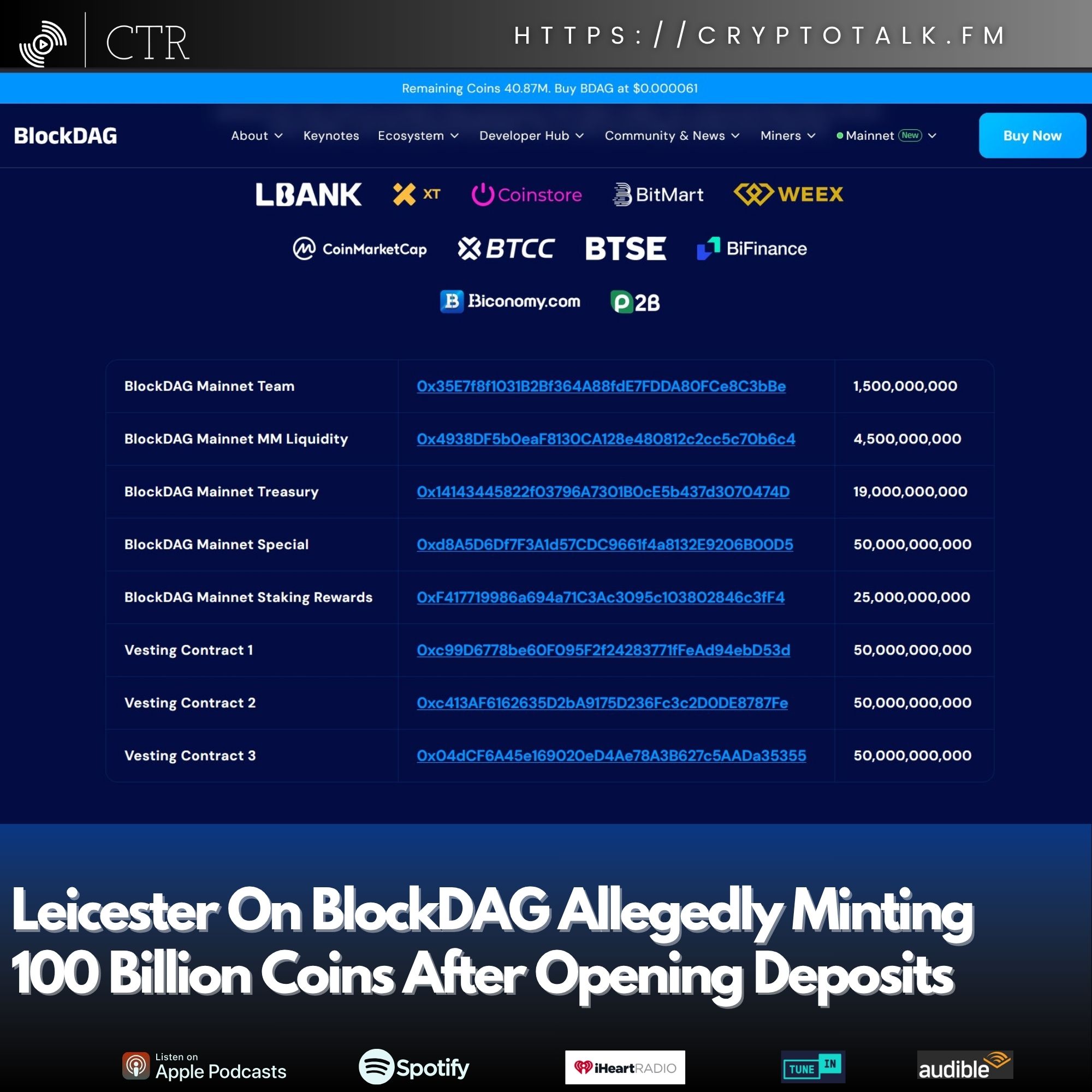
So if your supply is over inflated, which things like Pulsechain over inflated, it can print out of control. Dogecoin print out of control.
So if you're going in the billions of coins and you're talking about a blockchain and you're talking about things where you shouldn't need that many to begin with, you've already jacked up and you did that on purpose.
Because the flip you could have taken is to say, well we'll have hundreds of billions out there to test the market. But to do that you'd have to be open, test the waters, put that Many out there.
Take, you know, 10% of it, right? Put 10% in liquidity out in the various exchanges. Then just make them open. They are open for business. Whoever bought in pre sale, they can
[00:17:08] Speaker D: buy, sell, they can deposit, they can do whatever.
[00:17:10] Speaker C: And we're putting the supply out there. And let's see, let's see if buys start to exceed cells or not. If they don't, you do a buyback. They don't want to do that because that means they got to give money back, right? They want your money.
That's the flaw of not having an open market.
Because your open market, if your strategy is correct, doing a buyback and burn automatically improves the value of your product. Because you're saying, well that means really the problem isn't that there's a negative sentiment about the product because it's open market, right? So people can buy, sell it. It's out there.
We just have too much frickin supply. Okay, let's do a buyback and burn and that's going to decrease that supply.
Do other tools to burn.
Now you're encouraging developers, you can say developer build on our chain.
And the applications you build will give you a function that lets does a controlled burn of all the traffic underneath your application.
Now your developers are engaged and encouraged to contribute to the burn.
The goal being to get the supply down.
That's the goal.
Doing something like that.
This means the product doesn't have to be front loaded, it doesn't have to be up front.
Ethereum has a burn and mint to it. It's not like it's unusual. BNB has a burn and mint. Every blockchain has a burn and mint to it because they have to, because it's reacting to demand.
But if you already start with an overinflated supply, you've lost the plot. You've lost the plot in terms of what your price potential could be, number one.
Number two, you've lost the plot in sentiment because people see there's just too much fricking supply. Three, you've lost the plot in terms of price movement because of inflation.
Inflation long before there's any sort of price movement.
So in summary, an open market does multiple things for you. It lets you test the market, it lets you test the sentiment, it lets you test price, real price, fair price. You're still generating money. A buyback and burn mechanic increases sentiment because it shows good faith that you're trying to get the supply in control and in alignment with the sentiment of the market.
If you allow more exchanges to trade Openly and fairly. You're increasing the population of people who can trade it.
You then have a roadmap that you commit to and you support. This is where we're going. And what you're investing in is where we're going, not what we said, but where we're going.
And that's your messaging. That's all you really have to say. All you have to say is if you choose to do it, we're putting it out there now.
So if you choose to, you're investing in our roadmap. And then if they're transparent, truly transparent, they would say hold us to, hold us to account. If we're not delivering like we say, then you should sell crypto, I would argue all to a T.
They don't seem to understand how simple this all can be.
[00:20:29] Speaker B: That rhymes.
[00:20:30] Speaker C: Better said, it's that they don't want to understand. They don't want to do it above ground. They want to do it the shady way. Backed off and tell a scam because it lets them hide their tracks. They don't have to document their history. They don't have to be held accountable so they can hide and delete stuff when the feds come across their desk and start looking for them.
That's why they do these things. They do these things because they're trying to pull a fast one. And I would argue the majority of them, they're not going in it trying to rip you off per se. They get to a point, they see it's not going to work, falling off a cliff, then they take the money and run. And then they spin up another project, right? This has happened countless times. Pablo Crow apparent allegedly has done that same thing.
The freaking any flecked Earn hub, any fleck did it.
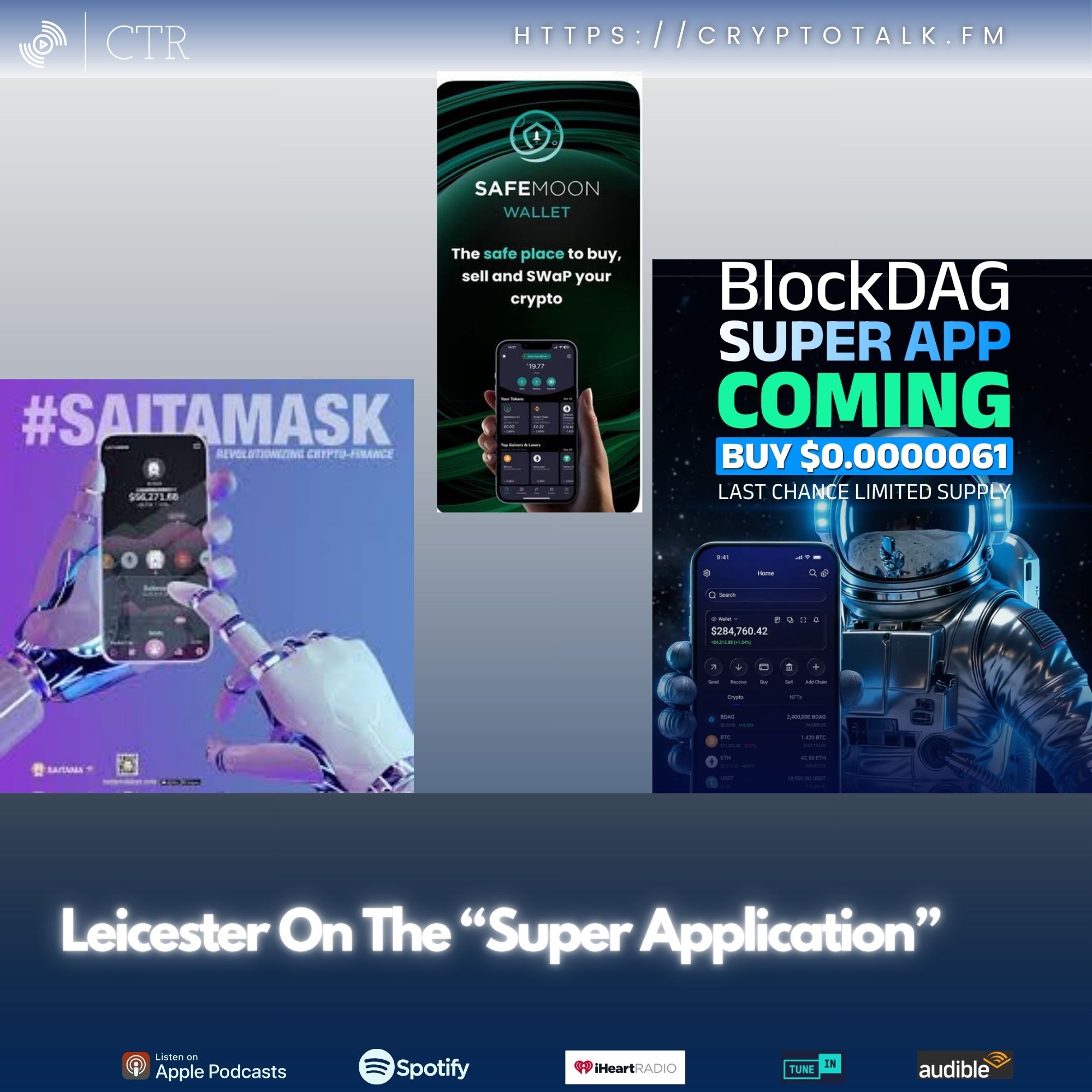
Safe Moon did it at a point. Saitama did it at a point. So it's not exclusive to any one project. They all do the same thing, which is, okay, we got something here. And it seems like something that starts to fall off. Why ever it does, it doesn't matter. Flip Loki, it doesn't matter why we're gonna take that money, spin up another thing over here, and then do it all over again. Because there's no regs protecting against that.
I said, and I actually have people argue with me, I said, really? Crypto lacks self governance. Self governance is this idea that we, anybody who's exposed to it, need to govern ourselves. It's not about excessive regulation. That's the wrong answer. The right answer is smart regulation that allows the same freedom but gives us a Way to go after mother fathers
[00:22:05] Speaker D: that are just shady. But we as an individual, we have to self govern. Starting with if all you have of the project is a guy standing on the moon talking to you, why is that sufficient for you to buy into the project?
[00:22:20] Speaker C: Two, if you choose to buy into any project, why are you putting all my money in it when it has no foundation, no framework, no product? Why are you doing that? That's gambling, rolling the dice.
Three, if you choose to gamble, you need to own that and say I chose to gamble, I lost the house, beat me, not scream for regulations to protect you. You're not a child, you're grown. So as a grown own your mistake. Your mistake is listening to a pitch with a guy standing on the moon. That's what happened. So own that. You did that. You then chose to yolo all your money and put your family at risk. You chose that. Once we're past that and you own that, then we need proof. This goes to again why I started. I would like to stop excessive telescam. I would love to see telescam if not banned because I mean that's extreme. I would love to see telescam held accountable to prevent the projects from completely deleting from banning. I'd like to see where they cannot do those things. They can do like a timeout for two days, three days. They cannot complete ban, they can't delete.
[00:23:32] Speaker D: Tracks everything.
[00:23:33] Speaker C: All history is retrieval and it's computer accessible fully. Doesn't need a phone.
[00:23:39] Speaker D: I would love to see something where
[00:23:40] Speaker C: it lets us generate the history trail.
Because think the reason that they want you to do phones is because you're not tuned to documenting the journey. If you're on a computer, what do I do? I do a quick screenshot and save it to my doc, right?
On a phone you can do screenshots. But certain apps will block screenshot capability on the phone. They can't block my ability to screenshot my computer. I'm encouraging people use a computer for anything that you do.
Get screens and document these things, document whatever they commit to document whatever promises. I'm talking promises.
[00:24:16] Speaker D: Not.
[00:24:16] Speaker C: You have up to. That's not a promise. I'm talking promises. You will make 50. That's a promise, right? Document those things. Document along the way.
In order for that to work, you have to start out skeptical. And that's the flaw some of you have. You're not starting skeptical, you're starting quote bullish. You shouldn't start bullish, you should start skeptical. Think through if somebody could really make you 50x on your money, then what's
[00:24:42] Speaker D: the incentive for them? Because that means they'd have to make way more than that for themselves.
It's not realistic, but that's what crypto
[00:24:49] Speaker C: has conditioned people to do because they're desperate for money.
[00:24:52] Speaker D: That's why I say it's gambling.
[00:24:55] Speaker B: That's not on them.
[00:24:56] Speaker C: That's on you. First, to condition yourself to be skeptical. Anytime you see a project making unrealistic return statements, people standing on the moon, a bunch of AI videos, you should instinctively be skeptical that they're probably trying to trick you. It doesn't mean you don't put a little bit in. It means you put in what you can afford to lose without thinking about it. The money you put in, you shouldn't care if you lose it, because that's the reality. That means that your return is going to be lower, that means your timing has to be quicker. But that's, that's. You should not be trying to be a millionaire off one project.
Diversification has always been the key. Diversification is the way you insulate yourself from damage of one project.
I don't mean diversify into a bunch of gambling dog tokens. I mean diversify into stable assets. Your counter, I can hear is, well, Bitcoin's down.
Of course it is, as many of the mains are as well. However, this is cyclical and we saw that bitcoin went crashed down as low as $12,000 fresh off the FTX fiasco and then 10x itself.
So if you had said Bitcoin is the one of all of these that seems like it's robust enough to recover in these catastrophe situations, then question why
[00:26:10] Speaker D: that's not the vast majority of your portfolio. Because you understand that when it drops
[00:26:14] Speaker C: to this point, it's a buying opportunity that pretty much guarantees your return. You just don't know how much return
[00:26:21] Speaker D: because your brain is coded to expect
[00:26:23] Speaker C: to be a millionaire.
[00:26:24] Speaker D: And you see that the most right now is a 2x on Bitcoin, well, that's not enticing to you because these other ones that have effective marketing or ineffective marketing given whoever it is is selling you on this narrative of being a millionaire overnight. And I'm telling you it's not going to happen. Those days are gone.
So you have to train yourself to understand that quick wins, small wins, and multiple of the small wins is the best way to move forward. And the vast majority of your portfolio should be stable assets that are likely to give you a return, just simply not make you a millionaire. Overnight.
Millionaires are built over time. Unless you're a gambler. So if you're a gambler, then be proud. Say it loud and proud that you're a gambler. And, and I'll respect you. Don't come at me saying that this project promised you X and they're a ripoff, whatever the F, and we're going to do a class action RICO lawsuit. This, that and the other thing, when at the end of the day, this is on you.
[00:27:17] Speaker C: Boo. Boo.
[00:27:18] Speaker D: You gambled, you tossed all your money or way more money than you thought made sense because you got duped.
[00:27:24] Speaker B: And that's what happened.
[00:27:25] Speaker C: The definition of a person who got duped is a mark. Look it up. I didn't make that up. It's out there. You can look up the definition. A person who is easily duped or by something is a mark.
You were a mark for their marketing. You can't have marketing without marks. That's why it's called mark. Because you were duped by marketing that enticed you to do something and they took your money. Did they rob you? Maybe.
But the bottom line is nobody took the money out of your wallet. You gave it.
No different. No different than somebody on the street, a snake oil salesman that tells you that this elixir is going to make you immortal and you give them $50,000.
Why are you doing that? Because they sold you a bill of goods. They sold you on a lie. It's no different. You can't then complain that the government needs to protect you from those claims. You have to own a lot of that and make smarter decisions if you can do that. And the reason I'm impressing it again, I've done it countless times. If you can train yourself to do that, then it's easy. It's easy. The open market projects are the ones that are worth doing anything with, not the constricted market projects. If they're constricted market, you understand something's wrong, Something's fundamentally wrong. You might be sold on chat, GPT telling you that. Well, there's a reason that that's because you're a mark who doesn't understand that AI based tools are configured to tell you what you want to hear, not what you need to hear. I am not AI, nor am I configured to tell you what you want to hear. In fact, frequently I'm not going to tell you what you want to hear because I understand what you want to hear is essentially supporting gambling. And I don't support that. Rather, I'd rather tell you what you need to hear, which is it's easy if you have a project. If it sounds too good to be true, it probably is. Should be the mantra you go in with. If it's a constricted market, you should be heavily skeptical. It doesn't mean you don't buy.
[00:29:27] Speaker D: I'm saying that if you have some
[00:29:29] Speaker C: pre sale why are you tossing all your money at it? Right?
[00:29:33] Speaker D: You have to be smart about it, be cautious about it.
[00:29:36] Speaker C: Question these things.
[00:29:37] Speaker D: Don't just YOLO and don't blindly trust and then don't try to deflect blame because you got duped. You did that and those that feel
[00:29:47] Speaker C: that they got ripped off, you might have.
[00:29:50] Speaker D: But the first step is owning it that your bad decision got you to that point. Then you commit to doing better.
[00:29:57] Speaker C: You know what?
[00:29:58] Speaker D: I need to stop listening to people that are standing on the moon with a bunch of AI garbage. I need to stop reading BS50X advertising and I need to think it through. These are unrealistic things that are designed to trick me into a project. I'll toss a hundred bucks in it assuming you have free hundred dollars.
[00:30:16] Speaker C: Not everybody does toss what's free to you understand it's not going to make you a millionaire. But think about it as I close.
Let's say you don't have $100 to spare.
Let's say you don't if you don't have $100 to spare. If you don't have $100 to your name and you had a project where if you put 10 bucks in the damn thing and it was able to 10x and you got $100 you're significantly better off. Right?
This is the that's you're being mind fucked.
It's easy.
What is the money that you know you can't afford to put in there? Okay, if that's the money you can't afford to put in there, then divide it by 10. Right? And if that's money you can't afford, you don't care if you lose it. 10 bucks, 20 bucks, whatever. Then put that in there. And if it 10 x's you now have the money you previously couldn't afford to do.
And then you have to train yourself to make sure you save out your profits. Put another 20 in there and see if 10x is again. I get it. That's a long road.
Most of the real millionaires out there, it was a long road to get there. Minimum, three, four years, not overnight. What you do is up to you.
Bottom line, it starts with owning and accepting bad decisions up front. Second, look for open market projects, not constricted market projects. Open market projects already want the smoke. They're saying we're out for business. They may not have a project yet, but they want the smoke. And there are some where they've not even produced a solid product or at least a stable product, but they're still open market. Well, why would you ignore them in favor of this other one over here that's not open markets. Constricted market and doesn't have a product, makes a bunch of false promises because you're a mark. You were duped.
Do better.
This is me trying to help you do better.
Open market is the key. If your market is not open and it's easy to understand that, you should be able to buy, sell, trade, withdraw, deposit, full scope, with no limitations other than KYC of the exchange, there should be no limits on what you do with those assets. If there's any limitation within that framework, it is not an open market and you should be instinctively skeptical. It is a constricted market. Then you should ask why it's constricted. It might be constricted for a valid reason. You can still buy into the exchange, presumably, and then sit on it. Just means you have less coins. That means you're training yourself to stop expecting to be a millionaire overnight.