[00:00:01] Welcome to Crypto Talk Radio, the podcast for everyday investors like you. Visit us on the
[email protected] and now here's your host, Leister.
[00:00:13] Thank you for that, Bailey. And welcome everybody out there in Crypto Talk radio
[email protected] hello all. Hopefully you had a good Labor Day break from work because you should have a jail beat behind you and spent time with family or did something fun or did something entertaining, did something useful, did something productive, did something other than stare at crypto is kind of what I'm getting at.
[00:00:36] Hopefully you did.
[00:00:38] I did.
[00:00:39] I was actually I'm following Fortunes weave. I know that for whatever reason there's no gamers out there apparently, but I was following Fortune's weave a little bit more because I'm intrigued at the game and I got some stuff done around personal things got stuff done.
[00:00:57] So now I'm back on the grind that had clicked me. I'm like oh geez, we didn't have money. So back on the grind. I will talk about a couple news bits mostly today. That's going to be the predominant messaging today is news bits. I think I'll talk about this whole salady business. It's actually older than you think and people are kind of misrepresenting a little bit.
[00:01:24] Coinmarketcap.com we will zoom out to the month chart starting with bitcoin currently hovering just shy of the $79,000 mark with a decent trend. The trend looks good, the trend looks strong. The trend looks like it's poised for an upward move.
[00:01:41] How strong went upward? I can't say. It's difficult because I think some like there was a breach.
[00:01:48] The white hack stuff. I'll talk about little little briefly Buzz a breach sentiment, a little bit damaged strategy in these sneakers, whatever that is. I'm not going to talk about that today. It's garbage. But I will talk about that breach a little bit but I don't know how high this goes. I can't say for sure. Ethereum meanwhile, just as much of a strong upward trend currently hovering just shy of the $2,500 mark. So Bitcoin and Ethereum appear poised or run to the next level up. I don't see the insanity of 2021. I don't see it. I see that there will be some upward motion but it'll be measured guarded. Kind of is strong but not crazy. I guess it's kind of the takeaway. Keep an eye certainly on bitcoin in the next couple of weeks and I do think we should see some upward. And again, I, I think I targeted 83, 000 or something. I think I, I think I was conservative with where it seemed like it was going to go, having no strength of that. That's just kind of a spitball based on the momentum I saw FBI, they're allegedly. I don't know what's really happening here, but allegedly this is around one of these scammers who's taken millions of dollars in a Ponzi scheme.
[00:03:02] A long time ago I said that cryptocurrency in general for everything other than Bitcoin is by and large all. It's all shady business, right? And it's risk.
[00:03:15] Someone on CoinMarketCap was asking the question, and I'll paraphrase what they said, but they said something to the effect of what's the difference between risk and this is just a flat out scam. And it occurred to me that some people don't understand that they're one of the same.
[00:03:30] When I say one of the same, I'm talking in terms of how you react to it.
[00:03:35] A scam by its very nature is unconfirmed until it's confirmed. Risk is the very act of going after something that is unconfirmed.
[00:03:46] So when I say they're kindred, they are very linked.
[00:03:51] So you are taking a risk if you are investing in something that is unconfirmed. If you just see a guy kicking on the moon, no product, no sustain, no regulatory protections, nothing to back it other than roll it up dice, which you are doing, that is a form of risk.
[00:04:08] But with every risk in crypto, they all could be scams, right? We excel, we understand that, we expect that, we understand how that works. The truth of the matter, there are people that don't seem to reconcile why that works. It works because you have to start with risk.
[00:04:25] Most people react to something that they see or something that they hear, it's after the fact, it's too late. What they should do is start with risk. Risk should be the first thing that you test and you measure how much am I willing to invest? How much am I willing to lose? That's essentially risk that you determine. Once you determine it, you take whatever action you choose and you accept the fallout of that decision, good, bad or indifferent. Some people will say, well, I'll do that. But if it turns out to be a scam, it's on them.
[00:05:02] What was the fundamentals that told you it was worth investing in? What was it that told you to invest that amount of money?
[00:05:08] Because Again, if you're bothered by it, it's more than you can afford to lose because you're really pissed. Some people come back and say, no, it doesn't bother me, but everything's a Chewbacca. It must bother you. Must do. That means it must be more than you can afford because you're bothered by it. Like, I have stuff that I've invested in Saitama, great example.
[00:05:28] I made a little money on Saitama, but I lost some. Right.
[00:05:32] The bottom line is, as long as it's something where you understand I'm gonna lose whatever amount, it should roll off your shoulder. It sucks, but it's, you know, it's what it is. And then there's some people that are just the charge, you know, because they can't let go.
[00:05:48] And I never said don't. I said, you got to start with your own bad decision. You got to own that you made a bad call in this business.
[00:05:56] So what happened recently, which is just yet another in the long line of said. So it's not anything specific or unique. I had to lay the precedent. It's like, you got to understand, this is endemic. Look it up to cryptocurrency, what I talked about. But there was a guy out in Fiji, his name is Edward Zimbardi. He's out in Fiji. He was on the run on the lamb. Ducking on the lamb.
[00:06:19] What allegedly happened is that he had taken funds from investors on from crypto, and he was putting it into his own trades and luxury purchases.
[00:06:28] And as is the case with Ponzi, he was using it to pay other investors.
[00:06:34] Now, this is the same as the Crystal Gaddo situation, where, same deal, he's buying luxury business. He's doing his own trade. He actually gave some of the money to a nonprofit, and he was using the money to pay other people, which is a Ponzi scheme. It's the definition of a Ponzi scheme. And I said at the time that I was doing the coverage about him as well as this other person on the block deck side. I said that these are people who. They know it's not within the bounds of the law. They know that it's not legal. They do it anyway because they think they can make it work.
[00:07:06] The whole reason that there's any sort of regulatory scrutiny around it is because it almost never works. At some point, it's going to crumble. Like the Bernie Madoff situation.
[00:07:15] There's only so much money in the world, and it. And it gets out of control. That's the whole Nature of the scam. In that case, it's a scam if you're taking money and you're using it to enrich other people off the backs of that money. It's a Ponzi scheme by definition. I challenge you to look it up. But look at how many people there are that do that.
[00:07:32] It's, it's. And crypto's fair game because there are no protections.
[00:07:37] So here, yes, regulars got the guy, they went after the guy, Delgado, he turned himself in.
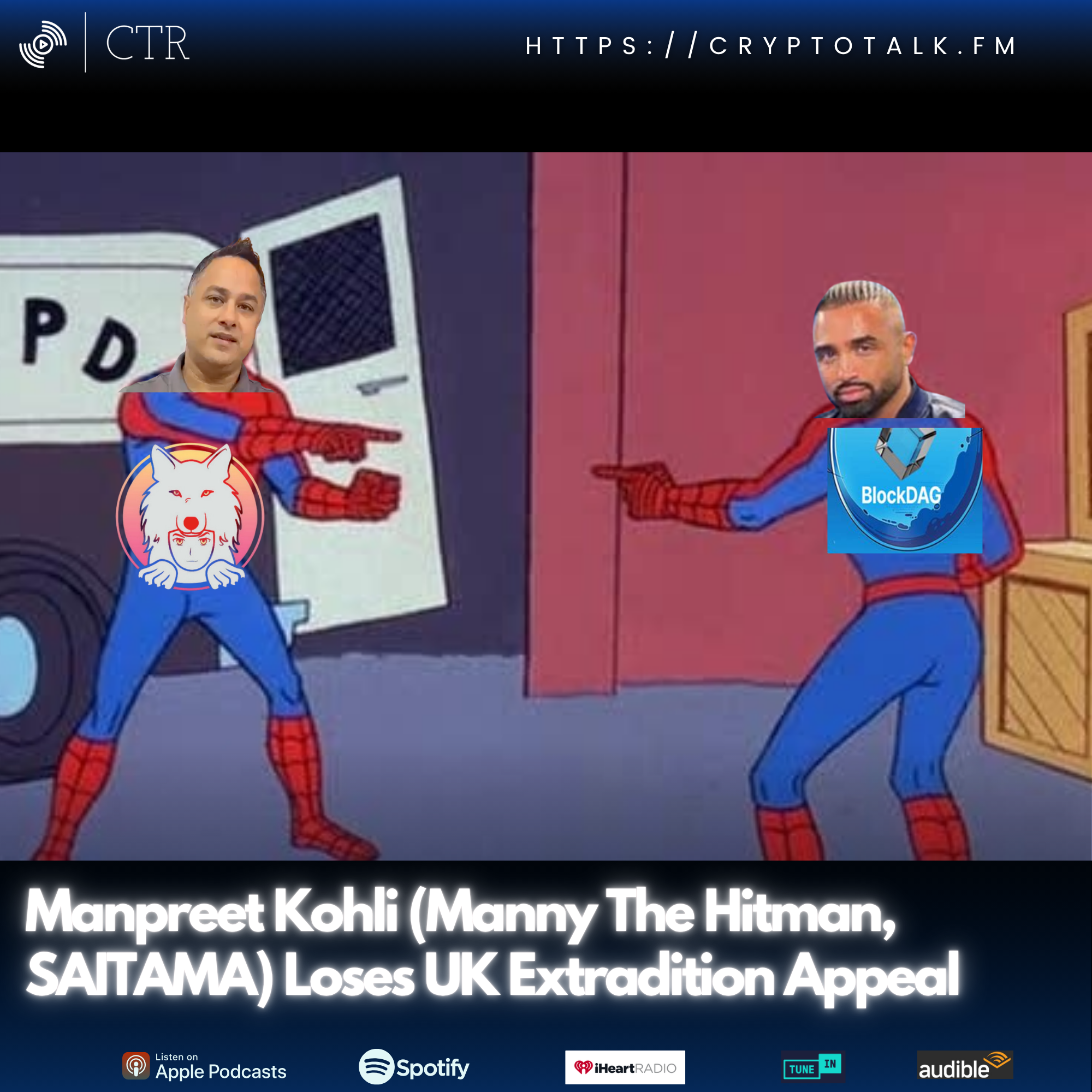
[00:07:44] Zimbardi, in this case, his issue is he went to Fiji, Fiji said no, we're, no, we're letting this guy go, we're turning him back in. Manny the rug puller, he lost his extradition case. So it's up to the other countries, is my point, to make it, you know, making an active deal.
[00:08:00] But the, the thing is, all of these people do this. All of these people do the same thing because they think they can make it, they think they can sustain it. They think they're, it's like an ego thing. They think they can sustain it to where it's not going to be a problem when the truth is they're not going to be able to sustain it. At some point, it's a house of cards, it's going to crumble. It's just a matter of when.
[00:08:20] Some people didn't understand how this works or how it keeps happening, how it keeps going the same way.
[00:08:27] And I thought, well, let me just explain because all of you'll see the pattern. All of them are doing the same thing.
[00:08:35] How does it work? It starts usually with marketing. Almost always it's marketing. They'll tell you, you know, unrealistic returns or unrealistic bonuses or unrealistic something.
[00:08:45] And in their mind, it's designed to tice fomo, get people to buy in more money, more money, more money, more money, more money, more money, more money.
[00:08:53] Build up a strong enough set of people so you expect, let's say you're able to generate, you know, 10 and you get a million people to buy it. I'm just throwing random numbers, okay, so you get 10 million bucks in there and then you do word of mouth, referral stuff or influencer stuff to stack it, get more and more and more and more. Then you create pyramid, like drip token, create pyramid, tell a friend, tell a scam, right? All of these, this money comes in from various sources. It goes into wallets that are controlled by the person who's orchestrating this whole thing. Could be their personal wallet, could be staged Wallets, whatever it is. The point is that it's using their wallets on what it is.
[00:09:39] That person will do one of a couple of things. But the main thing that you'll see that they do is they buy all sorts of fancy shit for themselves, right? Like the car salesman on Seifu, he was buying all sorts of. He was broke. He was literally broke. His family put him out. They. They outed him that he was broke. He was. He was bankrupt and then nothing. And then all of a sudden he's got mansions and all this crazy stuff when he was doing Seifu. And I tried to warn people, they didn't listen to me, give my credit. Coffeezilla tried to warn him. They didn't give him his credit. People tried to warn. It's like the pattern's there and you're not paying attention on this business.
[00:10:14] Then we see some sort of gambling in the mix. Like every single one of them, there's some sort of gambling. We see that they have a gambling addiction or they have some sort of stock, which is essentially a form of gambling addiction. They're doing longs, they're doing all sorts of risky things because they think if they have enough money and they win the big one, it'll wash all the rest of it, that they'll make everybody whole because they were good enough to win the big one.
[00:10:38] You see, like, look at every single one of them. They've all got some sort of gambling bug about them and they just need the money and they think they're going to win, and then they think they're going to pay everybody back. So then they take new investor money. So then the existing investors, they're squawking and screaming, where's my money? I need my money back. The new investors that are coming in this, when this happens, they'll take the new investor money to use it to pay the first set of investors. This is where the Bernie Madoff thing came in.
[00:11:09] And then it becomes a cycle because your gambling's failed. You can't get that to work. You're a spend. You can't stop spending. You're spending on nonsense like the Chris Delgado, and he just had all these cars and all this other stuff. And it's a trap, it's a pit that they. That they can't get out of. They create the pit because it's almost like an illness. They create the pit, they can't get out of it. So they got to find more people to get more money.
[00:11:35] And it's an endless cycle that's how the, that's how this game works, is they are doing something where they think they're going to get the money that pays everybody back, but in the meantime they're doing risky things where it's a low probability they're going to succeed, but they think because of ego that they're the one that's going to make it work where everybody else failed. In Madoff's case, that's literally what he was doing. He was doing all these investments and things that he was making promises that he knew were not going to sustain after a while, initially it worked and then didn't. And he did an interview before he died and he said the banks had to know that what I was doing, but yet I'm the one in jail. This is from jail prison. He's like, I'm the one in the jail. But they had to know what I was doing. They had to see the books, they had to see the numbers didn't make any sense. But how come they're not locked up? I'm the one locked up.
[00:12:26] Because he was doing the same thing. He said, no, I, this is what I was doing. I thought I could make it work. And I, and I, I was in over my head by the time it was done.
[00:12:36] I would argue Jeffrey Epstein is to some degree the same way. Epstein's a little different because Epstein was handed keys to the kingdom, he was handed great opportunities. He was put in front of rich people, he was handed a bunch of money and then he was enticed to get wealthy people and high profile people in situations where they were going to be basically exploited and extorted from. This is. That's literally what was happening with somebody like Epstein. But it's the same kind of deal where he got in over his head. By the time he realized how deep it was and the walls were closing, it's too late.
[00:13:14] Gets locked up, allegedly kills himself in prison. Nobody knows if he really did. We say he did Crystal gotto turns himself in. He get the feds didn't get him, he turns himself in. This guy, they got him because he went to a place like a dumbass that would had a great extradition agreement. My summary is to say when you're in cryptocurrency, this is the kind of thing you gotta watch out for. Because a lot of them do that because they think that they can pull it off.
[00:13:39] It's not even that they're maliciously trying to take your money. They think that they can make it work to where they'll make you whole.
[00:13:47] But they're not accounting for the fact that the reason it's against the law in the first place is because it infrequently, almost never works out and you are usually the one left holding the bag. It's not like they're trying to enrich you. The promises are too lofty. The promises are unrealistic, and there's likely some gambling going on where it's not going to pan out and you're going to be one stuck hold the bag. When we say, all of us say that's where risk comes into play, that rhymes. You got to think about what is it that's telling you to give them the money in the first place if they have nothing to show for it in an unregulated space? You have to own that accountability first and foremost, or you'll never learn and you'll never learn how to predict when that's going to happen. It always starts with. It always starts with lofty promises. It almost always starts with pre sell. There are these flags you can look and see. These are risky things. It doesn't mean you don't do it. It means you acknowledge that you're taking a gamble every single time you do because you don't have any protections.
[00:14:45] In other news, which I thought was rather funny because all these people who love AI and they're jumping on the boulder. I had somebody reach out, by the way, who wanted some help on Ancestry. I do Ancestry Research. Ancestry.com Research for People. He reached out and he's asking about one of his descendants. And I've done this for a couple people, but with this guy, he's asking about a descendant.
[00:15:07] And after I said, I'm happy to help you, just give me some information, he says, oh, I don't pay for this subscription. I just, I pay the stupid. What is the chat GPT for 20 bucks a month. And that's what told me this. So instead of paying Ancestry's fee, which is at last, check like 100 bucks a year.
[00:15:27] 100 bucks a year, which is what, eight, nine, nine and a little bit per month. You, for accurate data, you're willing to pay 20amonth.
[00:15:37] So 240 bucks every year for an AI to lie to you because it lied to him, gave him wrong information, flat out wrong. And I, I had to gently warn him. I'm like, I strongly recommend that you don't use AI, certainly not for Ancestry, because our history, it's going to get it wrong every time. Because even ancestry gets it wrong. I just Dealt with that with a person who was in tears because she thought she had a secret brother or cousin or uncle or something that she never knew. Because ancestry, everything tied out. The names tied out, the locations tied out, the age is tied out. What didn't tie out was race.
[00:16:16] Because ancestry does not promote messaging that says this is this kind of race. And so you need to be mindful that that matters. Because if you're descended from them and you're this other race, it's probably not possible. They don't do that because they were never taught to.
[00:16:33] So this person's in tears. I'm telling her I went through copious data. I. I'm trying to disprove it. I can't.
[00:16:42] Then I happened to find the one hook based on something she said. I happened to find a different hook that took me down a different path that helped validate things that came from this other family where they had some history and a couple people still alive that remembered. They gave some stories that said this, this is what happened. I found it unrealistic, but I was able to confirm based on the places and the locate, you know, the dates and everything, it's likely this person is truly somebody else that happens to have the same name, which then took me down a different path of their parents, which told me where they were staying, which told me it could not be the same person as this other person who was crying in my ear.
[00:17:23] But it took, it took ages to figure that out. You have to do it manually. Sometimes you have to go to the library to figure this stuff out. You can't just trust AI it's going to get it wrong or lie to you. So this person, I have to get back to him. But the point is that too many people are trusting AI like some blind, always right science. All AI is doing is searching the same garbage that's out there that you can search yourself, but it's misinterpreting it because it doesn't have context behind it.
[00:17:48] So when it pulls something back, it's not 100%. In many cases, it's going to get it wrong, especially if it's not a notable something.
[00:17:55] So I am imploring anybody listening here at CryptoTalkM, don't blindly trust AI. It's going to mislead you. It's going to lie to you. Turns out it misled a lot and lied to a couple other people. Because allegedly a fake AI supercomputer stole $24 million from tons crypto investors. The person was found guilty and after a scheme that affected 400 investors again, promised lofty APRs, promised money back, promised the same thing I just talked about it, promised all sorts of things. And in this case they misused AI for their own illicit gains.
[00:18:30] So again, unrealistic promises up front, things that aren't realistic don't make any sense. And AI, where you're blindly trusting it, where it should not be blindly trusted.
[00:18:40] Everything that you do with cryptocurrency to protect yourself requires that you do the effort yourself, not rely on anybody else, don't even rely on me. That's why you always hear me say, I don't know if this is legit or not yet to look at it yourself, because I don't know, I don't go deep in it. I simply share what's being said. Then you have to make a decision about what it means. But when I do say you can see the signs for Ponzi's or these other scams that are out there, that's because you could see them for yourself. I'm just simply highlighting what they mean when you do see them. But you should see them yourself. They're obvious. If you disregard them, you're liable to get ripped off. So be aware, AI is strongly probable to lie to you. Whether it's intentional or malicious isn't. Isn't the case. It's just something you need to be aware of.
[00:19:27] My last update today as I wrap up is to bring awareness to those.
[00:19:32] There's people out there that don't use computers. I don't get it, but there's people that don't use computers. For you, smart people that do use computers.
[00:19:40] I'll say you're smart people because you use computers. But I won't say you're smart people if you use Windows. I understand why you use Windows, but be aware that Windows is and has been the main target for viruses for a very long time. I'll tell you a little bit of history story might be a little bit funny.
[00:19:58] Back in the 90s, I think it was the 90s, there used to be a virus and Apple computers was the big thing. So if you were in the schools, in the homes, Apple computers kind of dominated, people weren't using Windows hardly at all. Or if they were, it was only in the workplace.
[00:20:16] So back in the Windows NT and Windows Millennium and all these deals prior to that, Windows started to get more traction as Microsoft made the interface more friendly. Prior to that, it was all Apple. Apple used to be the target for viruses because that's where it was in Schools, that's where it was in the homes. So there used to be a virus called Scores. Look it up. And Scores was one of the most brutal viruses on the Apple operating system. When less people started to use Apple, which happened. This is right around before Steve Jobs. So he got fired. He used to work there. They fired him.
[00:20:50] It almost died. I actually remember going down to Fashion Valley Mall, if you know, San Diego area, Fashion Valley Mall. They used to have a little Apple store. You know, the Apple stores. Now they're all fancy and glass. This was not that. This is like a little office cubby, dark, dirty carpet. And there was one idiot standing there near Apple Computers. That's all they had at the time. Nobody was going there. Nobody cared. It was dying. Then they brought Steve Jobs back to rebrand and fix everything. And that's where you got the new imac with the colors and all that. And then eventually the ipods and everything started to turn around for them, right.
[00:21:30] But during this lull, Windows got a significant advantage also because a lot companies started to support working from home. A lot of the schools started to embrace Windows, at least partially.
[00:21:43] They started to teach Windows to the students. Colleges were teaching Windows predominantly. Development started to become more of a thing. Windows just started taking front seat because simply saturation took place. The virus writers started to target Windows and Microsoft started to see that they were getting. They were starting to get nailed left and right Sunday because remember the early days of Windows, there was no default virus scanning. You were pretty much doing semantic. No Norton antivirus.
[00:22:10] If you wanted any kind of protection, you might have done McAfee, but McAfee's garbage.
[00:22:15] You were mostly doing Norton antivirus.
[00:22:17] In the old days. The Norton had the little foot and it was squashed. The little deal that was. That's what you had. That's what you had available.
[00:22:26] At some point Microsoft says, well, we need our own thing. They purchased another software.
[00:22:32] Anti Guard. I forget or anti. So whatever Something Guard, something, some other name. They purchased that and turned it into what used to be Windows something Anti Guard. And then they turned it into Windows Defender. And then they turn it into Microsoft Defender. And then they kind of baked it into the operating system. Used to be just a independent something. Then they started baking into the operating system. Try to add a layer of protection.
[00:22:57] You still have all these other virus scans softwares and everything else. But they were not as tuned as. As the Microsoft one became. It became really, really good. Microsoft then at some point released uac, which is User Account Control.
[00:23:12] You know, that nag when you try to install some software to nags you to verify it, that's uac. That was Microsoft's attempt to try to help warn you that something's about to be done to your computer that you don't expect.
[00:23:23] This was partially part of the defense. It was this scanning software plus this nag prompt, plus you no longer default admin. There's all these things they tried to change to help protect you, which got rid of the vast majority of them. This that I'm talking about with this malware attack recently circumvents that, which is why I'm warning When you download any program to your computer, you have to be careful about where you get the programs from. Because most programs, that's the way they carry the virus to your computer. Once it carries to your computer like a Trojan horse, it'll then spread its wings and navigate to your network and compromise other devices. Compromise of the files and you don't know what's happened. Sometimes defender can't catch it or won't catch it. If you run some other software, it can't catch it, won't catch it. Your browser scanner can't catch it, won't catch it. Especially if it's not direct viral behavior. Recently an attack came up that actually originates from a virus provider that comes from like the early 2000s. So it's not a new deal. It's just coming up again. And it's kind of a warning to people. There wasn't a lot of losses, but it's kind of a warning to people. I thought I would refresh people. For those that didn't know, it's called Salady S A L I T Y. And what happens is this executable in this case is targeting cryptocurrency users on the Windows side. So there's some executable you download. It could be something where you were told to download it, like say some wallet application or some scanning application or something. Somebody told you to download the executable program.
[00:24:57] I call it a program. You download it, you run it, you get the prompt, guarantee you will. And after you get the prompt, if you accept it, which everybody does, you shouldn't, but they do it now has infected your computer and other things on the network.
[00:25:13] You can't tell that it's actually doing anything because it's not changing anything on your computer per se, what it's actually doing.
[00:25:20] If you're one of those who does this, you shouldn't. But if you're one of those that does this, where you have Your wallet address, your public wallet address somewhere on your computer and you use it to send to somebody to receive crypto, right?
[00:25:34] So what do you do? You take that address, you copy it out of notepad or sticky notes or somewhere that you've got it on your computer so that you can paste it into some website so that you can get paid.
[00:25:44] This current variant of this, what it does is it detects when it's a cryptocurrency address and it will change it. It'll actually change it over to a different address, somebody else's address, so that they can receive whatever the crypto is that's supposed to be inbound. And of course, remember, crypto that's been sent is extremely difficult to retrieve back. If it goes to the wrong place and if it goes to a malicious actor, you're never getting it back.
[00:26:10] So in this case, they're testing that. This is called a clipboard. You've copied it, it's stored in memory. They're sensing that it's there, they're replacing it. So when you paste it somewhere, if you're not paying attention, could be just a couple letters and numbers off, you're not paying attention, you won't notice that the address has been changed and then you can't stop it. So that computer is completely hosed. Everything on your network's completely hosed. And they're all going to get subject to this. Turns out there was about $150,000 of losses because of this was a small number of people. It's like 33,000 people.
[00:26:44] Small impact, small. But I figured I would at least emphasize that this is the thing, so you're careful.
[00:26:51] Number one, here's my things. Number one, treat this as a one on one episode. Number one, I would recommend you not use a Windows device for things that are online activities. That's the start. Because many, again, many of the virus writers are specifically targeting Windows devices because the executables are so easy to deploy and write. And many of the protections are not designed for something like this. They're not designed to take, because nothing's changing, they're just intercepting something on your clipboard. Most virus protectors are not looking for those signs, they're not looking for those symptoms. So I would recommend, if you can avoid it, not to use Windows for this. That doesn't mean not to use a computer. I'm saying as expensive as it is, consider an Apple computer, they're not crazy expensive. Now for a decent high end compute computer or low end computer. So I would recommend getting away from Windows. Consider an Apple computer if you're going to work computers at home.
[00:27:44] But I would also recommend not having your contract address in a copy paste situation. If you can't avoid it, then at the very minimum pay attention to the address that's there. You're. You may or may not be able to memorize it. Some people can. If you can make sure you're paying attention to it before it goes. I think it's important.
[00:28:03] But I would recommend not storing it in a copy paste form if you're not sure, even if you are an Apple, just. I would recommend not doing that. I know it's hard to type it in there. You can also, if your computer has, if your computer has any kind of web camera or digital camera you can scan, turn your code, your public address into a QR code, which there's websites out there that can do that, turn it into a QR code and then scan that on demand when you need to tell it to scan the device. You can even get a hand scanner for QR code that will take it. It'll put it in so that it's bypassing the clipboard I'm describing ways to get around it. If you can't avoid the Windows type aspect. This largely affects Windows.
[00:28:44] Does that mean Apples are completely safe? No, because the root cause of what's happening, which is intercepting the clipboard could happen. It's just extremely unlikely on Apple computers is the point. If you're a mobile only person, you're not safe either because something could be put on your mobile device that intercepts it just the same or your device could have a SIM swap attack or something else. You're just a subject to it. Which is why people always emphasize not to store your wallet addresses in any kind of form. Now your public wallet address is generally safe as long as you are not putting it at risk of these kinds of attacks, which you wouldn't know without somebody like myself telling, which is why I'm telling you.
[00:29:24] In summary, it's a wild wild west out there as we all know. It's kind of crazy going on and the best thing you can do for yourself is the minimum.
[00:29:36] Don't trust AI, just don't trust it. One, two.
[00:29:40] Don't trust Windows.
[00:29:42] I understand Ubiquitous is cheap. $300 for a computer, I get it. But don't trust Windows because they are subject to it. They really are.
[00:29:50] And try not to put your wallet any of your addresses, any of your crypto in some form that can be copy pasted although that's there for convenience. Try to avoid doing that. But you can.
[00:30:00] I mean, the easiest way to do that is the easiest way to absolve any of this stuff is to obviously not put significant amounts in crypto. But I know there's gamblers out there, so I'm just simply sharing what I see. If you're one of those that just can't stop yourself from investing in cryptocurrency to try to help keep your stuff safe during uncertain times though they may be, Sam.